Video production for a company – when is it worth doing it yourself?
How can a company produce its own video production – and when is it worth it?


The significance of video in corporate communication and marketing is constantly increasing. Video is no longer just an addition to the flow of social media – in many cases, it is the most effective and engaging way to tell a company's story, showcase products, and build trust with customers.
Previously, quality video production was almost always outsourced to professionals, but nowadays technology, applications, and equipment have made it a skill accessible to small and medium-sized enterprises as well. As the cost of equipment has decreased and editing software has become easier to use, more and more companies have started to produce their own content themselves.
Still, many wonder the question:
“Is making your own corporate video really sensible?”
The answer is – yes, in certain situations.

Why is owning video production worthwhile?
Creating your own video production brings three significant advantages to a company: speed, cost-effectiveness, and authenticity.
1. Speed and Agility
In professional productions, schedules and budgets can stretch. Sometimes, however, a video is needed right away: for a social media campaign launching tomorrow, for internal communication among staff, or for a quickly emerging news story.
When a company has its own lightweight shooting capability and basic skills, a video can be filmed, edited, and published on the same day. This agility is invaluable, especially for companies whose day-to-day operations follow the rhythm of projects and deliveries.
Speed does not mean carelessness—it means flexibility and managed self-sufficiency.
2. Cost-Effectiveness
The cost of a single professionally produced video can range from thousands to tens of thousands of euros.
The same amount of money would suffice for many companies for their own content production over half a year if they have a smartphone, free editing software, and a clear content strategy.
When part of the content is produced in-house and the rest is purchased from professionals, a cost-effective and functional hybrid model emerges.
Self-produced videos:
everyday content, product presentations, quick social media posts
Videos produced by professionals:
brand films, launches, impressive 3D and 2D animations
This way, spending is properly directed: the most important productions are properly invested in, and supporting materials are created cost-effectively with one's own resources.
3. Authenticity and Humanity
Consumers and business clients have become more critical—too glossy content can feel distant.
A self-made video brings a company’s people and actions into focus in an authentic way.
A video can be:
an introduction of an employee in their own voice
a glimpse of everyday life on the production line
a customer thank you comment filmed on a mobile phone
It is exactly these kinds of corporate videos that generate trust and work excellently on social media channels.
The company’s own voice is best heard when it speaks for itself.
How does owning video production support marketing and sales?
Many companies make the mistake of thinking that the purpose of a video is just to “look good.”
In reality, a properly executed corporate video is a tool that supports the entire sales process.
Increasing awareness:
Light videos on social media, blogs, and newsletters increase visibility and strengthen brand presence.Building trust:
Faces of staff or customers on video make the company more approachable.Supporting sales:
Videos can demonstrate product functionality, explain the service process, or visualize value to the customer.Aftermarketing:
Videos can support the customer experience, offer tips, and strengthen commitment.
This is why managing your own video production is not just a technical skill—it is a strategic competitive advantage.
Who is suited to learn their own video production?
Growth-oriented small and medium-sized enterprises that want to produce content regularly
Industries where visual appearance and processes are important (e.g., manufacturing, construction, design, IT)
People-oriented companies where people are at the center of the brand
Expert services where videos can enhance trust and expert image
On the other hand, if a company's marketing is based on individual, visually striking launches or international campaigns, owning production is generally not enough—in such cases, it’s better to invest in a professional-made corporate video or animation.
What kind of content is best suited for self-production?
Not everything needs to be done in-house, nor should it.
But the following videos are excellent starting points:
Video Type | Description | Execution |
Personal Introductions | Key personnel of the company in front of the camera | iPhone + good microphone + Light editing with DaVinci Resolve |
Product Presentations | Demonstrating the product's features and usage | iPhone + good lighting + Editing in Resolve |
Event Highlights | Trade shows, celebrations, customer days | Shooting at the location with an iPhone + Possible free catalog music + Light editing in Resolve |
Social Media Clips | Quick contents of 15–30 seconds | Portrait video with an iPhone + Short and fast-paced editing in Resolve |
Internal Communication | Announcements, instructions, staff info | Shooting with an iPhone + a good microphone for own voice-over speech or AI-generated voice-over + Simple editing |
With these videos, one gets started, and as experience accumulates, one can transition to more diverse content, such as recorded interviews or graphically enhanced explanatory videos.
Typical mistakes to avoid
Too ambitious start.
Don't try to make a brand video right away—start with something short and simple.Poor audio.
Poor sound ruins an otherwise good picture. Always invest in a microphone.Forgetting lighting.
Use natural light or a simple LED light. Bright, even light works wonders.Unclear goal.
Every video should have one goal: to inform, guide, or sell.Videos that are too long.
Keep social media videos under 60 seconds, corporate videos between 1–3 minutes.
Practical implementation
In the next part, we will go through practical aspects – how to shoot, with what equipment, how to light, which editing software to use, and what kinds of animation elements can be easily added to one’s production.
How a company can implement its own video production step by step
Once a company has decided to try its own video production, the next step is practical implementation.
Often, this is the point where many hesitate unnecessarily—“Do we need expensive cameras and editing equipment?”
The answer is clear: no, we don’t.
Today’s technology allows a professionally looking corporate video to be made with lightweight tools, in a small space, and completely without an external production team. The most important thing is to understand the principles—light, sound, composition, and story.
1. Shooting Equipment: iPhone 15–17 Pro is sufficient
The current iPhone 15–17 Pro models provide image quality that just a few years ago was typical in television-level productions.
Apple has taken its video shooting technology to a level where a phone can genuinely replace a DSLR camera in corporate use.
Why the iPhone works in corporate videos
4K recording at up to 60 fps (sufficient for all corporate content)
ProRes and Log capture, preserving color information for post-production
Wide dynamic range—good contrast even in challenging lighting
Three lenses (ultra-wide, normal and telephoto) offer flexible angles
Excellent autofocus and facial recognition
In practice, the iPhone is sufficient for everything: social media clips, presentation videos, interviews, and even hero videos for websites.
Recommended Accessories
A small investment in accessories can vastly improve quality:
Accessory | Why it’s Important | Price Estimate |
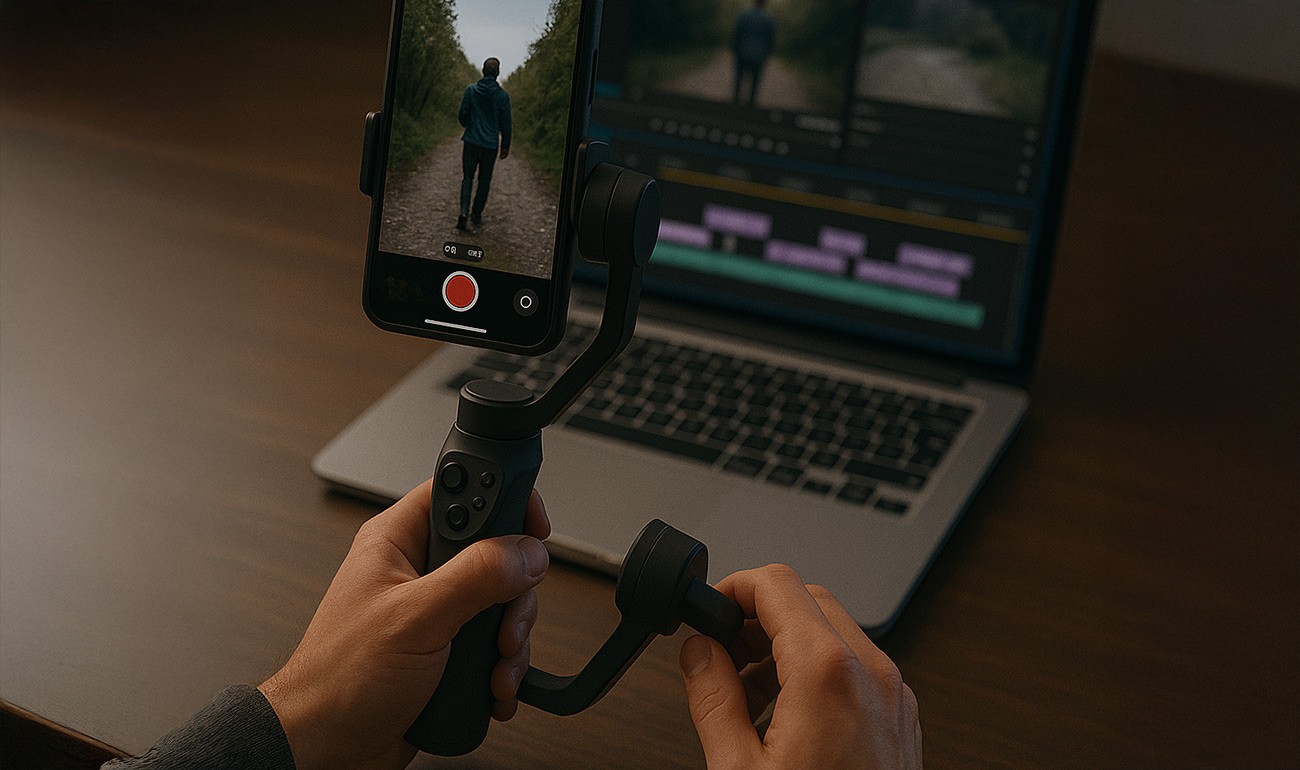
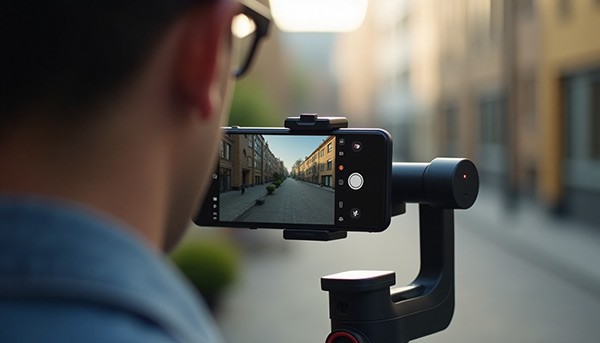
Gimbal (e.g., DJI Osmo Mobile 6) | Stable image, smooth movements | 150–200 € |
Microphone (e.g., Rode Wireless Go II or Boya M1) | Sound is often more important than the image | 50–250 € |
LED panel or ring light | Even lighting, especially in indoor shots | 50–150 € |
Tripod / table stand | Enables a stable picture and interviews | 30–80 € |
With these tools, a company can shoot completely independently and confidently—without the result looking like “phone video.”
2. Lighting – the Secret Ingredient for Quality
A quality image is created by light, not the camera.
The human eye can tolerate some graininess and blurriness, but poor lighting makes everything look unprofessional.
Basic rules for lighting in corporate video:
Keep faces always toward the light.
Use a window if possible—natural light is the best and free.Avoid direct backlighting.
If there is a bright window in the background, also add light to the faces.Use the three-point lighting method if you want professionalism:
Key light
Fill light
Back light
Even a small LED panel is sufficient as long as the direction and softness of the light are correct.
If you often shoot in an office, it's a good idea to create a permanent “light point” where lighting is always just right.
3. Sound – One of the Most Important Areas, but Often Overlooked
If the image is slightly grainy, the viewer will forgive it.
If the sound is poor, the viewer will immediately close the video.
A company’s own video production succeeds only if sufficient attention is paid to sound.
Basic rules for good sound:
Always use an external microphone.
The phone's built-in microphone picks up echoes and background noise.Wired lapel microphone works great indoors.
Wireless microphone (like Rode Wireless Go) provides freedom of movement.
